Rav Rommel Banaag – Software QA Engineer

I’m a Software QA Engineer with 8+ years of experience ensuring high-quality releases across web and mobile applications. I specialize in building QA foundations from scratch, designing test strategies, and implementing scalable automation frameworks for startups and growth-stage teams. My focus is simple: ship fast, reduce risk, and protect user trust.
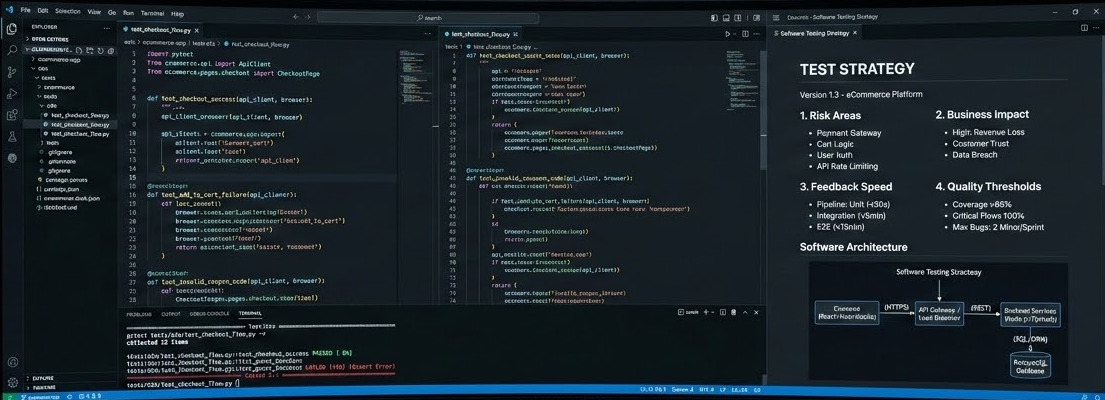
As a Software QA Engineer, I’ve learned this the hard way: a strong test strategy is not a list of test cases. Real products don’t fail because someone forgot to write a test case—they fail because risks were misunderstood, business goals were ignored, or speed quietly overpowered quality. This article breaks down how I actually build test strategies in production environments, especially when working with founders, product managers, developers, and senior QA teams. No theory fluff—just the real decisions that shape an effective QA process.
A test strategy answers why, where, and how we test, not just what we test. When I design a test strategy, I’m thinking about:
Test cases are outputs. Strategy is intent.
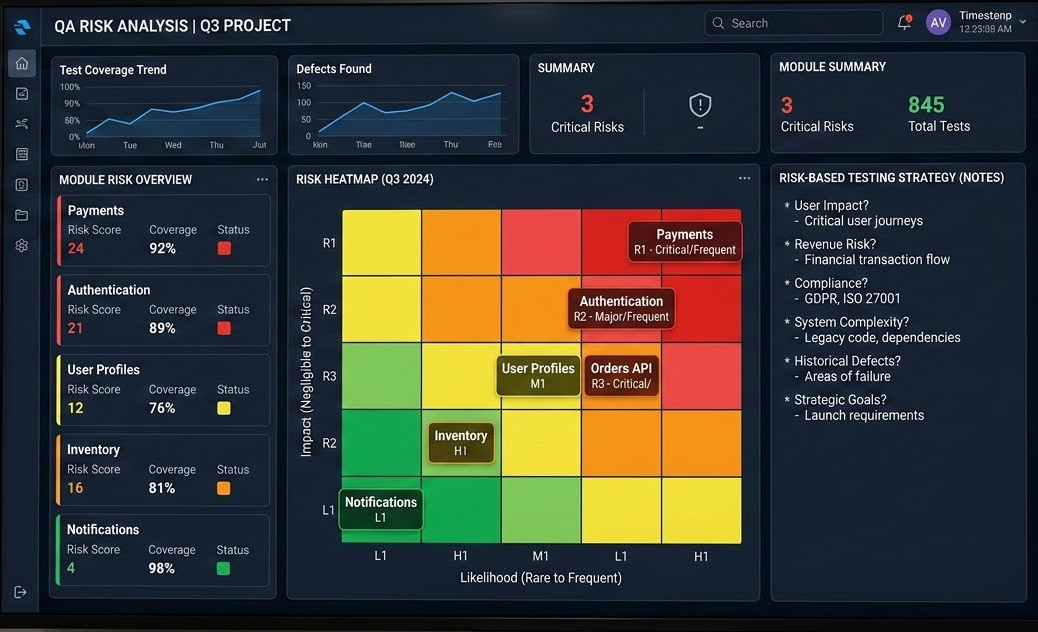
Risk-based testing is not a checkbox—it’s a mindset. I prioritize testing based on impact × likelihood.
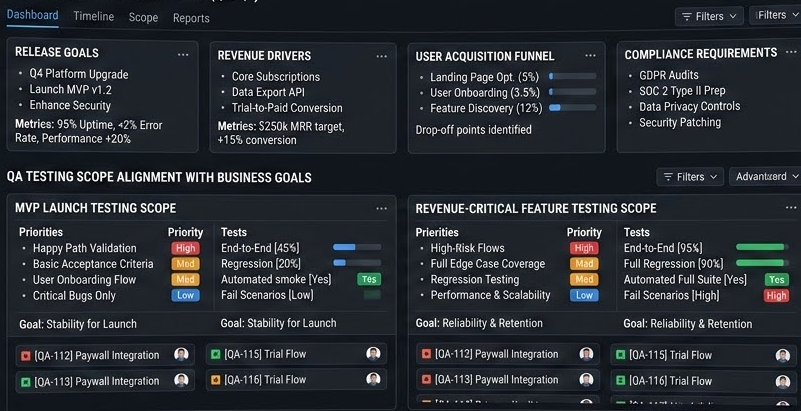
I never define test scope in isolation. I align it with:
A startup racing to market needs a different test strategy than an enterprise platform scaling reliability.
I never define test scope in isolation. I align it with:
I focus on happy paths, major failures, and data integrity. Edge cases are documented but not fully automated.
I expand regression, add automation, test failure states, and validate monitoring and rollback readiness.
Same product. Different goals. Different QA strategy.
You can’t maximize all three at once. Every test strategy is a conscious compromise.
I communicate trade-offs early:
This transparency builds trust with product managers and developers—and avoids QA being blamed later.
A good test strategy protects what cannot fail.
My focus is on:
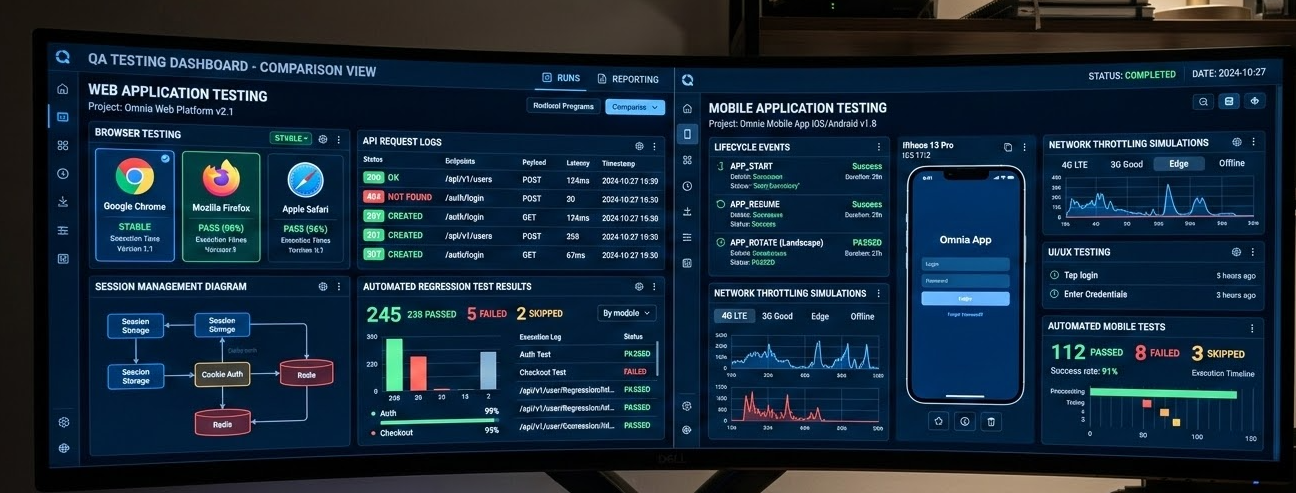
Automation plays a big role here, especially for regression.
Mobile strategy is more selective:
Automation supports critical flows, but manual insight still matters more on mobile.
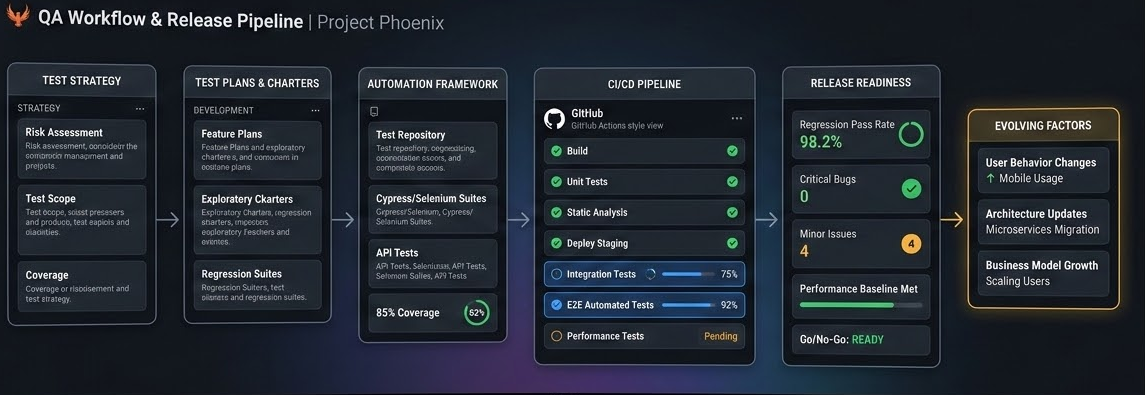
A solid test strategy connects naturally to:
It also evolves. I revisit the strategy when:
That’s how software QA stays relevant—not reactive.