Rav Rommel Banaag – Software QA Engineer

I’m a Software QA Engineer with 8+ years of experience ensuring high-quality releases across web and mobile applications. I specialize in building QA foundations from scratch, designing test strategies, and implementing scalable automation frameworks for startups and growth-stage teams. My focus is simple: ship fast, reduce risk, and protect user trust.
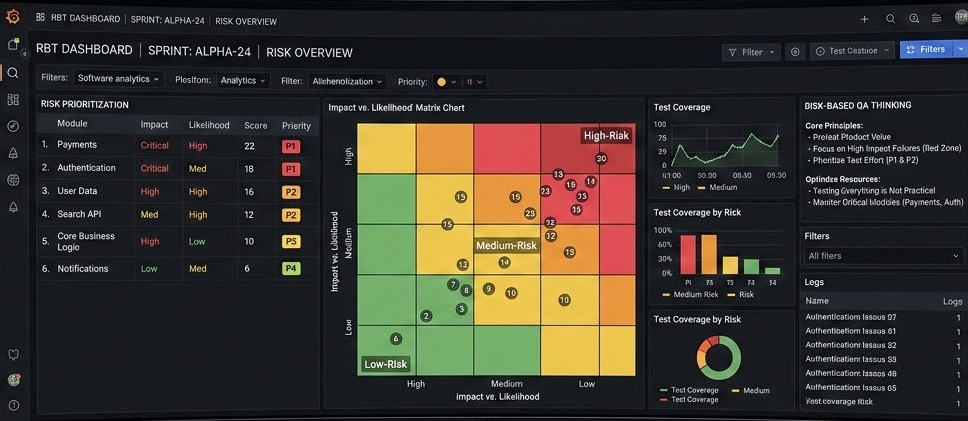
In modern software development, quality assurance is no longer about testing every possible scenario. As a software QA engineer, I focus on risk-based testing, a strategy that prioritizes areas that matter most to product stability, business value, and user safety. QA is not just about finding bugs — it is about protecting value. In real product testing environments, exhaustive testing is often impractical. Systems are too complex, release cycles are faster, and user behavior is unpredictable. Instead, I use a risk-based testing mindset that evaluates impact and likelihood before investing testing effort.
At the core of my QA strategy is a simple but powerful model: Risk = Impact × Likelihood I assess features based on two factors: Impact — How severe is the failure if this feature breaks? Likelihood — How often is this logic executed or modified? High-impact and high-likelihood areas receive deeper validation. For example, payment processing, authentication, and data security flows always deserve stronger coverage compared to cosmetic UI updates. This approach helps balance testing depth while maintaining release speed.
Before writing test cases or executing checks, I evaluate context using practical engineering questions.
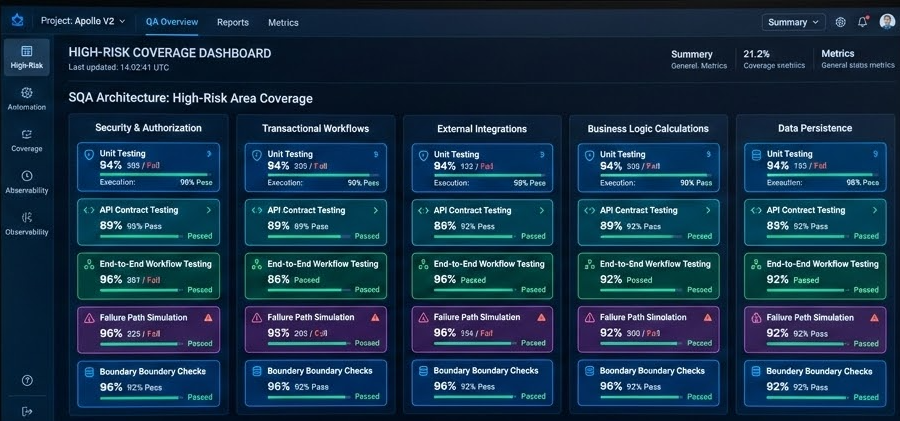
Features that directly affect users, revenue, or compliance require strict verification. Authentication logic, transaction processing, and personal data handling are high-priority.
Modules under active development have higher regression risk. I usually automate regression coverage around unstable components.
New features and complex business rules carry uncertainty. I focus on boundary testing, integration flows, and state transitions.
Anything involving payments, customer data, or regulatory requirements receives deeper testing coverage.
Risk-based QA strategy does not distribute effort evenly. Instead, I build coverage depth where failure is most expensive.
Software teams must release features quickly without compromising reliability. I usually structure testing work into three layers:
These are lightweight validations before release, including login flow checks, core transactions, and basic API responses.
Automated test suites protect existing functionality and prevent unintended changes.
Human-driven exploration helps discover unexpected behavior in real-world usage scenarios. Exploratory testing is not random — it is guided by product understanding and risk awareness.
Quality engineering decisions must align with real operational conditions such as:
Writing many unstable tests is less valuable than maintaining fewer reliable ones. Good test automation should reduce engineering friction, not increase it.
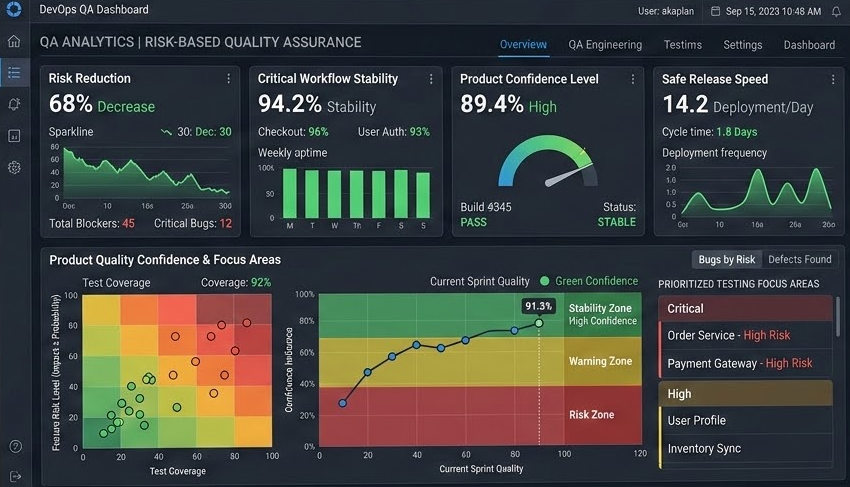
Instead, they measure:
Risk-based testing allows developers, product teams, and QA engineers to work together efficiently.
Risk-based testing is a practical software QA strategy for real product development. Rather than attempting to test everything, I focus on protecting business value, users, and system stability. Quality assurance engineering is not about achieving perfection — it is about delivering reliable software with controlled risk. If you are building modern software systems, start by asking one question:
That simple shift in mindset can transform how you approach software testing strategy.